
Bulgarian Revival and the Transformation of a Nation
The history of Bulgaria is marked by powerful rulers, ancient civilizations and remarkable cultural achievements. Yet one of the most defining chapters in the country’s history began not on a battlefield but through education, literature, architecture and the determination of ordinary people. Known as the Bulgarian Revival, this period transformed Bulgarian society and laid the foundations of the modern Bulgarian nation.
Developing mainly between the 18th and 19th centuries, the Bulgarian Revival was a movement of cultural awakening and national consciousness. It encouraged people to rediscover their historical roots, preserve their language and traditions, and imagine a future in which Bulgaria would regain its political independence.
Understanding this period is essential for anyone interested in Bulgarian history and the origins of the country’s modern identity.
The Historical Background of the Bulgarian Revival
For centuries, Bulgarian territories were part of the Ottoman Empire. Despite significant political and social changes, Bulgarian communities preserved their language, Orthodox Christian traditions and local customs.
By the 18th century, economic development and expanding trade had created a growing Bulgarian merchant class. Increased contact with European ideas also encouraged intellectual curiosity and cultural renewal.
One of the most important figures of this awakening was Paisius of Hilendar. In 1762, he completed his influential work, Istoriya Slavyanobolgarskaya. His writing encouraged Bulgarians to remember their medieval achievements and take pride in their historical identity.
This work became an important inspiration for generations of Bulgarian educators, writers and cultural leaders.
Education and Literature Changed Bulgarian Society
Education became one of the strongest foundations of the Bulgarian Revival. Communities began establishing schools where children could study in their native language rather than depending exclusively on traditional religious education.
Neofit Rilski was among the important educators who contributed to the development of modern Bulgarian teaching and literature. His grammar book, published in 1835, represented a significant step towards standardizing the Bulgarian literary language.
The establishment of schools, reading rooms and publishing activities encouraged a new generation of intellectuals. Newspapers and books helped spread ideas about national identity, education and political freedom.
These developments also created a stronger interest in Bulgaria’s medieval past. Studying archaeological remains, inscriptions and historical monuments became increasingly important for understanding the country’s cultural roots. The work of an Archaeology Expert offers an interesting perspective on how material discoveries help reconstruct the stories of ancient civilizations.
Architecture and Art as Expressions of National Identity
The Bulgarian Revival was not limited to books and classrooms. Its influence can still be seen in the architecture of historic Bulgarian towns.
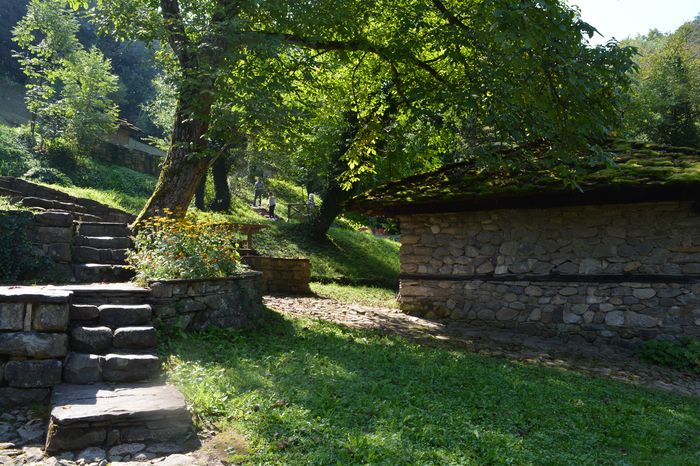
Koprivshtitsa, Tryavna and Plovdiv preserve some of the finest examples of Revival architecture. Their colourful houses, wooden balconies, decorative ceilings and beautifully painted interiors reflect the growing confidence of Bulgarian merchants and craftsmen.
Traditional woodcarving, icon painting and religious architecture also flourished during this period.
These artistic achievements combined local traditions with influences from neighbouring European and Balkan cultures. They created a distinctive visual identity that remains an important part of Bulgaria’s cultural heritage.
From Medieval Bulgarian Kings to National Independence
The Bulgarian Revival encouraged people to rediscover the achievements of earlier Bulgarian rulers and medieval kingdoms. The First and Second Bulgarian Empires became powerful symbols of historical continuity and national pride.
Rulers such as Simeon the Great and Ivan Asen II represented periods when Bulgaria was a major political and cultural power in southeastern Europe.
Their legacy helped strengthen the national movement during the 19th century. Exploring the history of the Bulgarian Kings provides a broader understanding of the historical foundations that inspired the Revival.
The movement eventually developed a stronger political dimension. The April Uprising of 1876 became a major event in the struggle against Ottoman rule. Although it was suppressed, international attention to the Bulgarian cause increased significantly.
The Russo-Turkish War of 1877–1878 led to the restoration of Bulgarian statehood and opened a new chapter in the country’s history.
Discover the Connections Between Byzantine and Bulgarian Heritage
Bulgarian history cannot be fully understood without examining its relationship with neighbouring civilizations. Byzantine political influence, Orthodox Christianity and artistic traditions all contributed to the development of medieval Bulgaria.
The cultural connections between these societies continued to influence Bulgarian architecture, religion and literature for centuries. Exploring Byzantine Bulgaria reveals another fascinating chapter of this shared historical story.
Explore the Bulgarian Revival and Its Lasting Legacy
Today, the Bulgarian Revival remains one of the most important periods in the country’s cultural memory. Its influence can be found in schools, museums, historic houses, churches and national celebrations.
Discovering these places allows visitors to understand how education, culture and collective determination helped shape modern Bulgaria.
Whether you are interested in historical personalities, medieval Bulgarian kings, traditional architecture or the struggle for independence, the Bulgarian Revival offers an extraordinary journey through the country’s past.
If you would like to learn more about Bulgarian history and its remarkable cultural heritage, please Contact Us and discover more about the stories that shaped Bulgaria.